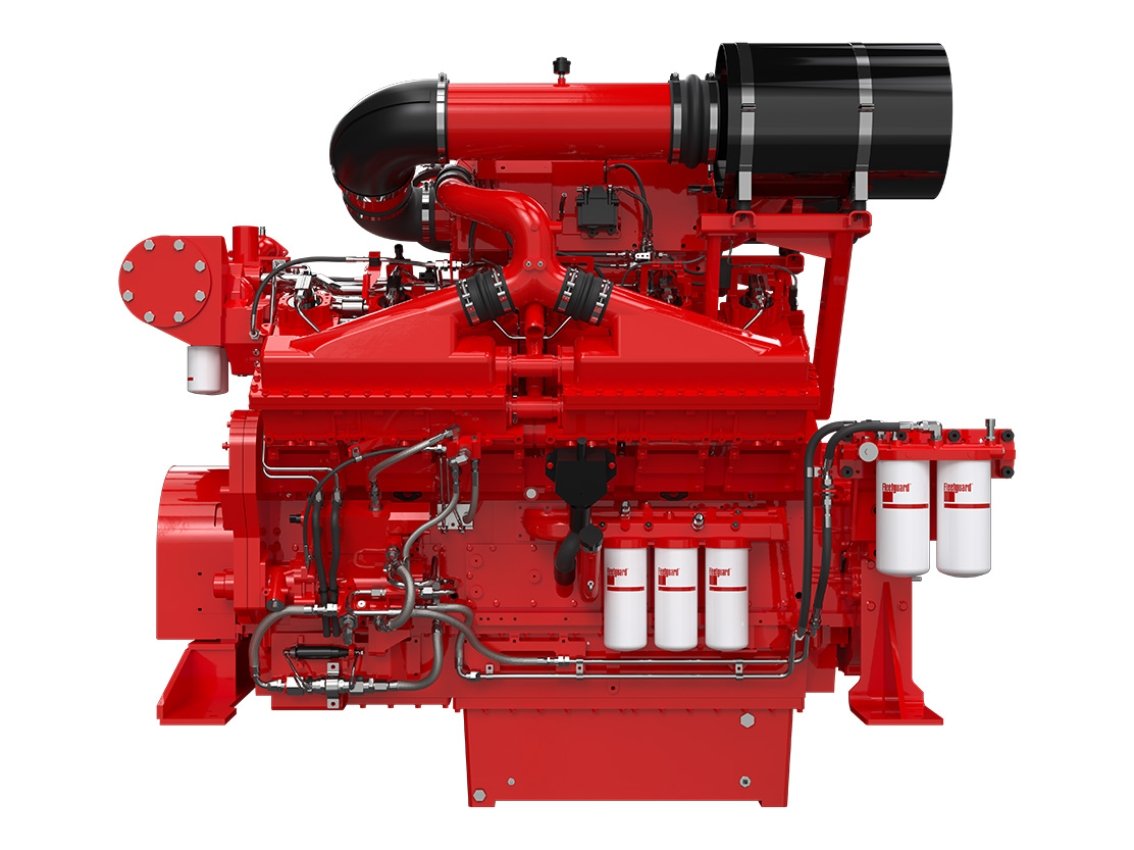
Cummins’ K-series and QSK-series big-bore diesels aren’t the kind of engines you find under the hood of a pickup truck. These are the workhorses behind mining equipment, marine propulsion, locomotives, generator sets, and heavy industrial power units — engines built to run for tens of thousands of hours between major overhauls. If you’re responsible for one of these units, the Cummins operation and maintenance manual isn’t optional reading. It’s the document standing between routine upkeep and a very expensive failure.
What Makes These Engines Different
The K38 and K50 are mechanically governed inline-6 and V16 configurations respectively, built for durability over decades of service in applications where downtime is measured in lost production, not inconvenience. The QSK38 and QSK50 are the electronically controlled evolutions of the same basic architecture, adding Cummins’ electronic fuel system and engine management on top of the proven mechanical platform. On paper they look similar; in practice, the maintenance procedures, diagnostic approach, and even the tools you need to service them differ quite a bit between the mechanical and electronic versions.
This is the single biggest reason people search specifically for “K38” or “QSK50” manuals rather than a generic Cummins big-bore guide — using the wrong manual means following fuel system procedures that don’t match the engine in front of you, which at this engine size is not a small mistake.
What the Manual Actually Covers
A proper Cummins operation and repair manual for these engines is organized to support both day-to-day operators and the maintenance team responsible for keeping the unit in service:
- Pre-start inspection checklists specific to the installation type (marine, genset, mining, rail)
- Starting and shutdown procedures, including cold-weather starting aids where applicable
- Lubrication system specifications — oil type, capacity, and change intervals scaled to duty cycle
- Cooling system maintenance, including coolant specification and heat exchanger service for marine and industrial installs
- Fuel system service, split clearly between mechanical injection (K-series) and electronic common rail or PT fuel systems (QSK-series)
- Turbocharger inspection and service intervals
- Electrical system and alarm panel operation, critical for unattended generator applications
- Scheduled maintenance tables broken down by operating hours, not just calendar time
- Troubleshooting guides tied to fault codes on the electronic variants, and to symptom-based diagnosis on the mechanical versions
Why Duty Cycle Changes Everything
One thing a lot of people miss when they first pick up one of these manuals: the maintenance intervals aren’t one-size-fits-all. An engine running continuous duty in a power plant application gets serviced on a different schedule than the same engine used for standby backup power that only runs a few hours a month. The manual accounts for this with separate interval tables, and matching your actual application to the right table matters more than people expect — running continuous-duty intervals on a standby unit wastes money on unnecessary service, while running standby intervals on a continuous-duty unit is how you end up with premature wear.
Mechanical vs. Electronic: Know Which One You Have
Before you do anything with the fuel system, confirm whether you’re working on a K-series mechanical unit or a QSK electronic unit. They are not interchangeable procedures. The mechanical K38/K50 uses a PT (pressure-time) fuel system with mechanical governing, while the QSK38/QSK50 uses Cummins’ electronic control module with common rail injection. Trying to apply electronic diagnostic steps to a mechanical fuel system — or vice versa — wastes time and can lead to incorrect adjustments on a system that was never designed to be adjusted that way.
A Note on Serial Numbers and Build Specs
Big-bore Cummins engines go through running changes throughout their production life, sometimes significant ones. Two QSK50 units built three years apart can have different ECM calibrations, different cooling package configurations, or updated turbocharger specs. Before ordering parts or following a specific procedure, check the engine’s serial number and build specification against what the manual references. This single step prevents more wasted service calls than almost anything else on this list.
Keeping the Manual Where You’ll Actually Use It
Given how these engines are typically installed — engine rooms, gensets in remote locations, marine engine spaces — a printed or properly archived digital copy that doesn’t depend on an internet connection is worth having on hand. Technicians working in a ship’s engine room or a remote mine site generator building don’t always have reliable connectivity, and the last thing you want during a troubleshooting call is to be stuck without the reference you need.
These engines are built to run for a very long time when they’re maintained correctly. The manual is what tells you what “correctly” actually means for your specific unit, your specific application, and your specific duty cycle — and that’s worth getting right from day one.