
A vehicle spends a surprising amount of time being seen. It sits in a parking lot, waits at traffic lights, travels through neighborhoods, and pulls up outside businesses where potential customers are going about their day. Most of those people won’t stop to ask about the company behind it. Still, they might remember a name, a logo, or a striking design they noticed on the way to work.
That’s what makes vehicle graphics such an interesting marketing tool. They take something a business already uses and give it another purpose: communicating with people wherever the road leads. When planned carefully, vehicle graphics can help a company look more established, improve brand recognition, and make a stronger impression without relying entirely on digital ads or traditional signage.
A Moving Advertisement With a Practical Purpose
Unlike a billboard that stays in one place, a branded vehicle can reach different streets, neighborhoods, and commercial areas throughout the week. A plumbing van might visit several residential communities in a single day. A delivery vehicle could travel between warehouses, stores, and customer addresses. Each stop creates another opportunity for people to notice the business.
Of course, visibility alone doesn’t guarantee new customers. A graphic needs to communicate quickly. People rarely have enough time to study a vehicle while it passes, so the most effective designs tend to feature a recognizable logo, a clear business name, a short description of the service, and an easy way to get in touch.
Too much information can make the design difficult to read. A long list of services, several competing fonts, and tiny contact details may look impressive on a computer screen but become confusing from across the street. Simplicity usually wins when the audience has only a few seconds to look.
Making a Brand Feel More Established
Customers often form an impression before they speak with a business. A clean, professionally branded vehicle can suggest that the company pays attention to details and takes its work seriously. That doesn’t replace good service, naturally, but it can help create a positive first impression.
For businesses that depend on local trust, consistency matters. Matching the vehicle’s colors and logo to the company’s website, uniforms, and printed materials helps people recognize the brand across different settings. Someone who sees a company van in their neighborhood might later recognize the same logo when searching online.
Professionally designed custom vehicle wraps offer one way to create that consistency. Depending on the project, a wrap may cover an entire vehicle or focus on selected areas, such as the doors, rear panels, or hood. The best option depends on the vehicle’s shape, the design, the budget, and how much visual impact the business wants.
A full wrap can create a bold, unified appearance, while partial graphics may provide a more restrained look. Neither is automatically better. What matters is whether the finished design communicates the business clearly and suits the way the vehicle is used.
Different Vehicles Need Different Design Approaches
A graphic that works beautifully on a small car may not translate well to a box truck or a large van. Vehicle dimensions, door seams, windows, handles, and body curves all affect how a design appears once installed. A logo placed across a door gap, for example, may look awkward when the door is opened.
Designers should consider these physical details from the beginning rather than treating the vehicle as a flat rectangle. They also need to think about how people will see it. A rear design might be especially important for vehicles that spend a lot of time in traffic, while side graphics may be more noticeable when the vehicle is parked along a street.
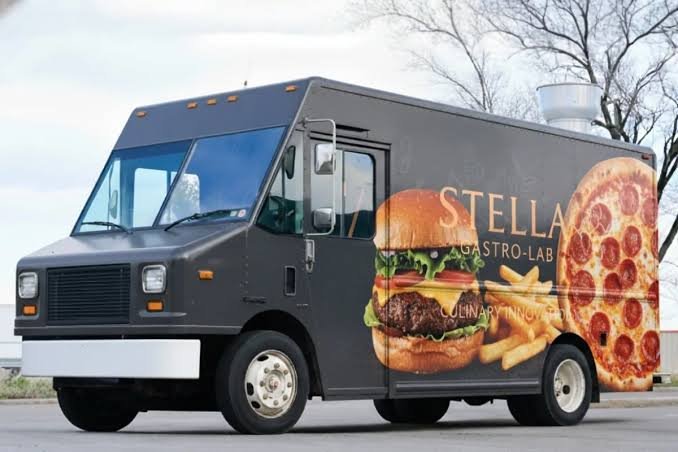
Businesses with mobile kitchens have a slightly different set of needs. Food trucks often serve as both transportation and storefront, so their graphics need to attract attention while helping customers understand the food and experience on offer. Bright colors, appealing imagery, a memorable name, and readable menus can work together, provided the design doesn’t become cluttered.
For a food business, the vehicle’s appearance may influence whether someone walks over to order. That makes design decisions part of the customer experience, not just decoration.
Safety and Readability Should Never Be Afterthoughts
Some vehicles have a public-facing role where visibility and clear identification are especially important. Utility fleets, service providers, municipal departments, and public safety organizations may use graphics to help people identify a vehicle quickly.
When designing for emergency vehicles, appearance must work alongside operational and legal requirements. Markings, reflective materials, colors, and placement may be regulated by the relevant jurisdiction or agency. A design should never interfere with required identification, lights, windows, or safety equipment.
Commercial fleet graphics also need sensible placement. Drivers must retain clear sightlines, and important vehicle features should remain accessible. Before installation, businesses should check applicable local rules and confirm that materials and graphics are suitable for the vehicle’s intended use.
Good design isn’t only about looking impressive. It should support the vehicle’s purpose and avoid creating problems for the people who depend on it.
Choosing Materials That Can Handle the Road
Vehicles face changing weather, sunlight, dust, road debris, and frequent washing. A graphic that looks excellent on installation day still needs to hold up through ordinary use. Material quality, surface preparation, installation technique, and maintenance all influence the finished result.
Before choosing a provider, ask about the materials they use, how they prepare the vehicle, and what care the graphics will require. The vehicle’s paint condition matters as well. Existing damage, peeling paint, or poorly repaired surfaces may affect adhesion and removal.
It is also worth discussing how long the vehicle is expected to remain branded. A company leasing a van for a short period may have different needs from a business planning to keep the same fleet for years. The right solution should take the intended lifespan into account rather than focusing only on the initial price.
Once the graphics are installed, follow the manufacturer’s cleaning guidance. Harsh chemicals, abrasive brushes, and unsuitable washing methods can damage certain finishes. Regular gentle cleaning helps keep the design presentable, particularly for vehicles that travel long distances or work outdoors.
Measuring More Than Just Appearance
Vehicle graphics can be a valuable marketing investment, but businesses should have realistic expectations. A wrap doesn’t automatically generate a fixed number of calls or sales. Results depend on the quality of the design, where the vehicle travels, how often it is visible, the company’s reputation, and whether people can easily find more information.
A simple way to evaluate the impact is to ask new customers how they heard about the business. Companies can also use a dedicated landing page or a memorable web address on the vehicle to help track responses. Over time, those small observations provide a better picture of what the branding contributes.
Give Every Journey a Clear Message
A branded vehicle is more than a moving surface for a logo. It’s part of how a company presents itself to customers, employees, and the wider community. A thoughtful design can make a business easier to recognize, communicate what it offers, and create a more consistent identity across everyday interactions.
The most successful projects begin with a straightforward question: what should someone remember after seeing this vehicle? Answer that clearly, choose materials suited to the work, and make sure the design fits the vehicle itself. With those basics in place, an ordinary drive can become another useful opportunity to build recognition and trust.